How to Build a High-Protein Breakfast Meal Prep Routine
How to Build a High-Protein Breakfast Meal Prep Routine
Most people abandon their healthy eating goals before 9 a.m. Not because they lack willpower, but because they open the fridge at 7 in the morning, find nothing ready to eat, and end up grabbing a granola bar or skipping breakfast entirely. A high-protein breakfast meal prep routine solves that problem at the root. When the food is already made, the decision is already made.
This guide walks you through everything you need to build a practical, sustainable breakfast prep system — one that prioritizes protein, fits into a real weekday schedule, and does not require you to spend your entire Sunday in the kitchen.
Why Protein at Breakfast Actually Matters
Protein is the most satiating macronutrient. When you eat a high-protein breakfast, you trigger the release of satiety hormones like peptide YY and GLP-1, while suppressing ghrelin — the hormone that drives hunger. The practical result is that you stay full longer, think more clearly through the morning, and are far less likely to raid the office snack drawer by 10:30 a.m.
Research published in the American Journal of Clinical Nutrition has consistently shown that adults who consume 30 to 40 grams of protein at breakfast report significantly lower hunger levels throughout the day compared to those eating lower-protein or carbohydrate-heavy morning meals. For active individuals, athletes, or anyone trying to build or maintain muscle mass, front-loading protein intake is a well-supported strategy.
The target for most adults is somewhere between 25 and 40 grams of protein per breakfast, depending on body weight, activity level, and overall daily goals. Hitting that number consistently is far easier when your meals are prepped in advance.
Setting Up Your Prep System Before You Cook Anything
Before you crack a single egg, you need a functioning system. The biggest mistake people make with meal prep is jumping straight into cooking without a plan for storage, portioning, or rotation. Here is what to sort out first.
Choose Your Prep Day
Sunday afternoon is the most popular choice, and it works well for most schedules. Set aside two to three hours. If Sunday does not work, Wednesday evening can serve as a mid-week refresh — prep enough food for Monday through Wednesday on Sunday, then do a smaller batch mid-week to carry you through Thursday and Friday.
Get the Right Containers
Invest in a set of glass storage containers in two sizes: individual portions (around 2-cup capacity) and larger batch containers (around 4 to 6 cups). Glass is worth the upfront cost because it reheats evenly, does not absorb odors, and lasts for years. Mason jars are excellent for overnight oats and protein smoothie ingredients. Silicone muffin molds are essential if you plan to make egg muffins or protein bites.
Map Out Your Week
Before you shop, decide which breakfasts you will eat on which days. A practical five-day rotation might look like this: egg-based dishes on Monday, Tuesday, and Wednesday (since eggs keep well for three to four days refrigerated), and grain or yogurt-based options on Thursday and Friday when you want something you can grab without reheating. Write it down. A sticky note on the fridge works just as well as any app.
Build a Protein Anchor Shopping List
Every high-protein breakfast builds around one or more protein anchors. Keep these stocked consistently:
- Eggs (a dozen or two per week)
- Greek yogurt (full-fat or 2%, plain — at least 32 oz per week)
- Cottage cheese
- Canned or smoked salmon
- Turkey or chicken sausage
- Lean ground turkey or beef
- Edamame (frozen)
- Protein powder (whey, casein, or a plant-based blend depending on your preference)
- Tempeh or firm tofu for plant-based options
With these ingredients on hand at all times, you are never more than a few minutes away from a high-protein breakfast, even on weeks when your prep does not go as planned.
The Core Recipes: What to Actually Make
Baked Egg Muffins
Egg muffins are the workhorse of breakfast meal prep. They take about 25 minutes start to finish, store well for up to four days in the refrigerator, and reheat in 60 seconds. Each muffin delivers around 7 to 9 grams of protein, so three muffins gives you a solid 21 to 27 grams before you add any sides.
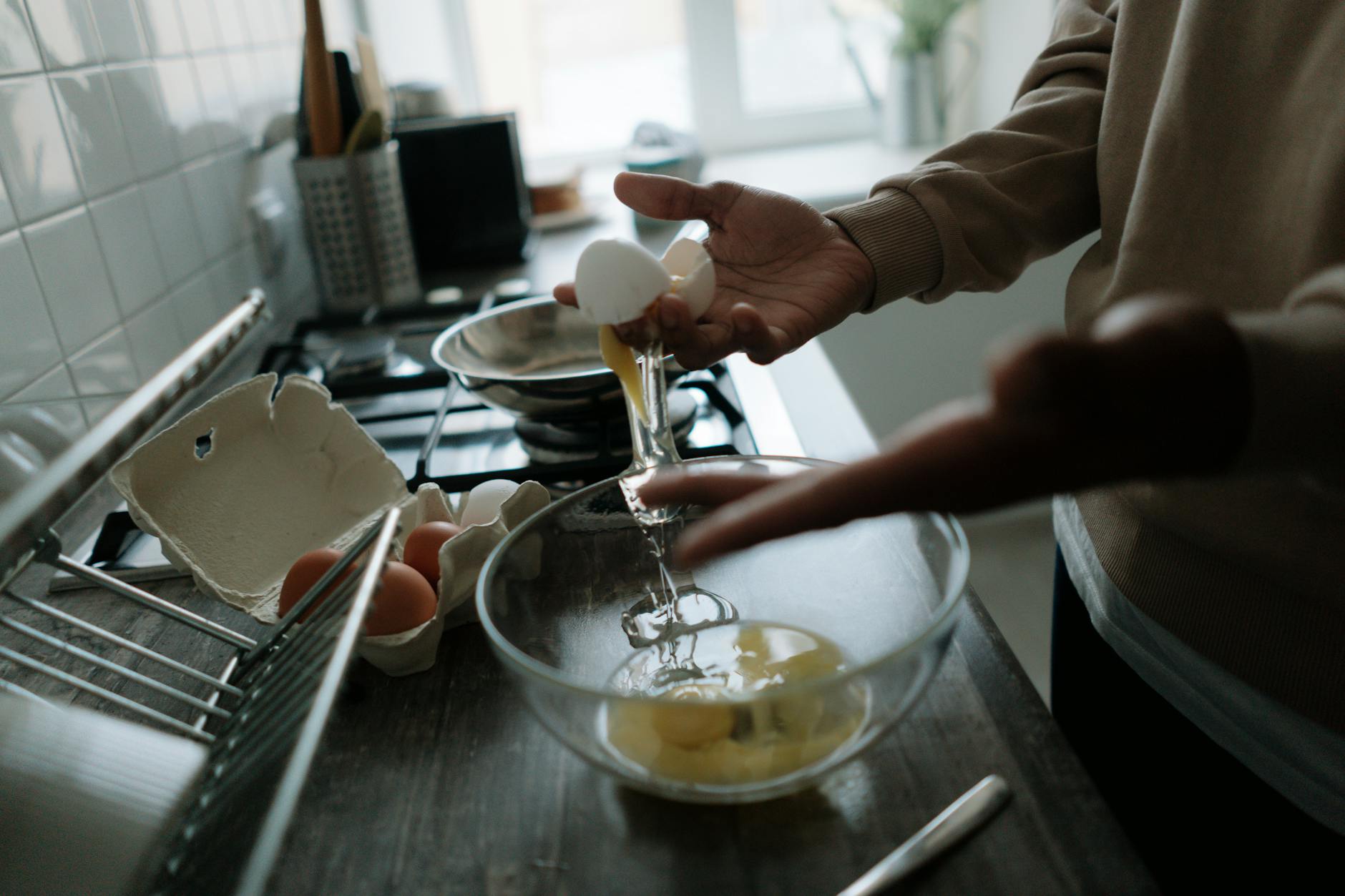
To make a batch of 12, whisk together 10 large eggs with a quarter cup of milk, salt, pepper, and any seasoning you like — smoked paprika, garlic powder, and dried chives are a reliable combination. Pour the egg mixture into a greased silicone or non-stick muffin tin, filling each cup about halfway. Then add your fillings: diced bell pepper, crumbled turkey sausage, chopped spinach, sun-dried tomatoes, or shredded cheese. Top off with more egg mixture until the cups are about three-quarters full. Bake at 350°F for 18 to 20 minutes until puffed and set. Let them cool completely before refrigerating.
Vary the fillings each week so the rotation stays interesting. A Mediterranean version with feta, olives, and roasted red pepper is completely different from a Southwest version with black beans, jalapeño, and pepper jack.
Overnight Oats with Protein Boost
Standard overnight oats are a carb-forward breakfast. To turn them into a high-protein option without losing the convenience, you need to be deliberate about the additions. A basic high-protein overnight oats recipe that delivers around 30 grams of protein per serving looks like this:
- Half a cup of rolled oats
- Three-quarters cup of plain Greek yogurt (not regular yogurt — Greek yogurt has roughly twice the protein)
- One scoop of vanilla or unflavored protein powder
- Half a cup of unsweetened almond milk or regular milk
- One tablespoon of chia seeds
- Toppings: fresh or frozen berries, a tablespoon of almond butter, a light drizzle of honey
Combine everything except the toppings in a mason jar, stir well, seal, and refrigerate overnight. Add toppings in the morning. Make five jars on Sunday and you are covered for the entire week. These keep well for up to five days, making them the most shelf-stable option in your rotation.
Sheet Pan Turkey Sausage and Vegetable Hash
This is the most versatile batch-cooked breakfast in the lineup. Make a large pan on Sunday and portion it into four or five containers. Each portion reheats in two minutes and pairs with eggs cooked fresh in the morning, or can be eaten on its own if you are running late.
Use a large rimmed baking sheet lined with foil for easy cleanup. Dice three or four medium sweet potatoes into half-inch cubes and toss with olive oil, salt, pepper, and smoked paprika. Spread across the pan and roast at 425°F for 15 minutes. Push the potatoes to the sides, add sliced turkey or chicken sausage links to the center, and scatter in diced zucchini, red onion, and bell peppers. Roast for another 15 to 18 minutes until everything is caramelized and the sausage is cooked through. Portion into containers. Each serving contains approximately 22 to 26 grams of protein from the sausage alone.
Greek Yogurt Protein Bowls
These require zero cooking and take about five minutes to assemble five servings. The key is using a thick, high-protein Greek yogurt — Fage Total 0% or Chobani Plain are solid options available in most grocery stores. Do not use flavored yogurt; the added sugar is not worth it, and you lose control over the macros.
Layer into each container: three-quarters cup Greek yogurt, a quarter cup of cottage cheese (this bumps the protein significantly and blends into the texture without being noticeable), a tablespoon of hemp seeds, a small handful of walnuts or almonds, and a quarter cup of fresh or frozen berries. Add a drizzle of honey or maple syrup if needed. Each bowl delivers 28 to 35 grams of protein depending on the brands used, with minimal prep time and no cooking required.
Smoked Salmon and Cream Cheese Roll-Ups
For days when you want something savory that requires no reheating and feels a bit more refined, smoked salmon roll-ups are ideal. Lay out two large whole-wheat tortillas. Spread a thin layer of cream cheese across each. Add sliced smoked salmon, capers, thinly sliced red onion, and fresh dill if you have it. Roll tightly, wrap in plastic wrap, and refrigerate. Each roll-up delivers around 24 to 28 grams of protein. Slice them in the morning or eat them whole. They keep well for two days.
Cottage Cheese Egg Scramble Cups
Cottage cheese scrambled into eggs sounds unusual but produces a noticeably creamier texture and adds a meaningful protein bump. For a batch, scramble six eggs with half a cup of full-fat cottage cheese over medium-low heat, stirring constantly. Season with salt, garlic powder, and chives. Add wilted spinach or sautéed mushrooms if you want more volume. Portion into three containers. Each serving contains around 25 grams of protein. These reheat well but are best consumed within two days, so make them mid-week rather than on Sunday.
How to Structure Your Full Week
Here is a realistic five-day high-protein breakfast schedule built from the recipes above:
- Monday: Baked egg muffins (3 muffins) with a Greek yogurt protein bowl — approximately 50 grams of protein combined
- Tuesday: Overnight oats with protein powder and almond butter — approximately 30 grams of protein
- Wednesday: Sheet pan hash with two eggs cooked fresh — approximately 36 grams of protein
- Thursday: Smoked salmon roll-up with a side of Greek yogurt — approximately 40 grams of protein
- Friday: Overnight oats (second jar) or cottage cheese egg scramble cups — approximately 25 to 30 grams of protein
This rotation covers the full week with variety. Nothing is eaten more than twice. The most perishable items — the egg muffins and hash — are scheduled earlier in the week. The overnight oats carry through to Friday without any quality loss.
Time-Saving Techniques That Actually Work
Batch Cook Grains in Advance
Cooked quinoa and farro store well in the refrigerator for up to five days and can be used as a base for savory breakfast bowls. Cook a large batch on Sunday and use it as a bed for fried or poached eggs mid-week. Quinoa in particular is one of the few plant-based complete proteins and contains around 8 grams of protein per cup cooked.
Pre-Portion Dry Ingredients
For overnight oats, measure and combine the dry ingredients — oats, chia seeds, protein powder — into individual jars on Sunday. Then all you need to do