Portion control in meal prep
Why Portion Control Matters in Meal Prep
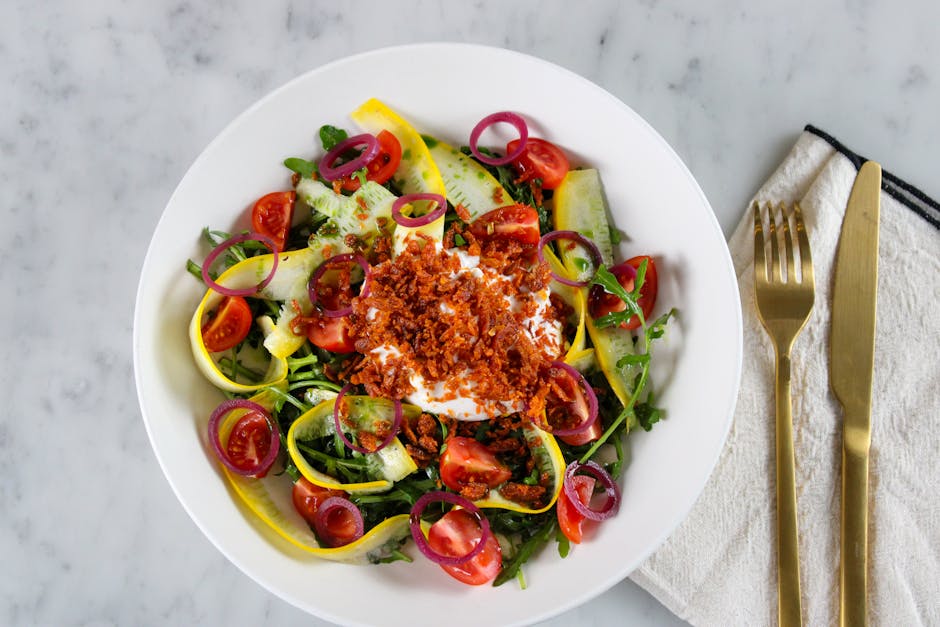
For anyone who spends a few hours each week cooking in bulk, the math is simple: the amount you plate today determines the nutrition you receive tomorrow. In the United States, where restaurant portions can be two to three times the recommended serving size, mastering portion control is less about strict dieting and more about building a sustainable system that matches your caloric needs, schedule, and budget. This guide walks you through a practical, step, by, step framework to measure, allocate, and store meals so that every container you pull from the fridge serves both your hunger and your health goals. We, ll use the FDA Nutrition Facts label, USDA Dietary Guidelines, and real, world US examples to help you translate abstract recommendations into everyday kitchen actions.
Meal prepping saves time, money, and decision fatigue, but it can also amplify portion distortion if you cook without a clear size guide. Many home cooks instinctively double or triple a recipe because they assume ?more is better.? In fact, the average U.S. adult now consumes roughly 30?% more calories than the 2000, calorie reference diet, according to theU.S. Dietary Guidelines for Americans, 2020?2025. When you batch, cook a large pot of chili or a tray of roasted chicken, the difference between a —?cup serving and a 1, cup serving translates to hundreds of extra calories per container.
In a typical workweek, a professional in Chicago might pack five breakfasts and five lunches. If each meal overshoots the target by just 150, kcal, that adds up to an extra 750, kcal per week, roughly the caloric equivalent of a fast, food value meal. Over a month, the surplus can become a modest weight gain, especially for people who are sedentary most of the day.
Portion control in meal prep is not about cutting food; it, s about defining the amount that aligns with your energy needs and then consistently plating that amount. By doing so, you retain the convenience of batch cooking without the hidden calorie creep.
US Serving Size Standards: Decoding the Nutrition Label
The first step is knowing what a ?serving? actually looks like on a nutrition label. The FDA defines a serving size as the amount of food that is ?commonly consumed? and provides the Nutrition Facts per that amount. These values are not recommendations; they are reference points that let you compare products. For meal prep, you, ll often be cooking raw ingredients and measuring cooked portions, so you need to translate FDA serving sizes into the units you actually use, cups, ounces, or grams.
? Cooked pasta: 1, cup (?140, g) = 2, oz dry.
? Grilled chicken breast: 3, oz (?85, g) cooked.
? Cheddar cheese: 1, oz (?28, g).
? Rice (white, cooked): 1, cup (?158, g).
? Peanut butter: 2, tablespoons (?32, g).
Many restaurant meals exceed these standards dramatically. For example, a typical chain, restaurant chicken entr—e serves 6?8, oz of meat, two to three times the FDA 3, oz serving. This ?portion distortion? is one of the biggest contributors to excess calorie intake in the US.
| Food category | FDA standard serving | Typical restaurant serving | Calorie difference |
|---|---|---|---|
| Grilled chicken breast | 3, oz (85, g) | 6?8, oz (170?227, g) | +140?280, kcal |
| Cooked pasta (penne) | 1, cup (140, g) | 2, cups (280, g) | +210, kcal |
| French fries | 3, oz (85, g) | 6?7, oz (170?198, g) | +260?300, kcal |
| Cheeseburger | 1, oz cheese (28, g) | 2?3, oz cheese (55?85, g) | +120?240, kcal |
| Soda (regular) | 12, fl, oz (355, ml) | 20?32, fl, oz (590?950, ml) | +80?200, kcal |
When you batch, cook at home, you can choose to adhere to the FDA standard or adjust upward based on your custom calorie target. The key is to decide the amount before you start cooking and then portion consistently.
Determine Your Personal Portion Targets
To know how much of each macronutrient you need, you first calculate your total daily energy expenditure (TDEE). For most US adults, a quick estimate uses the Mifflin - St Jeor equation, then multiplies by an activity factor.
- Men:(10 — weight in, lb) + (6.25 — height in, cm) ? (5 — age in, years) + 5
- Women:(10 — weight in, lb) + (6.25 — height in, cm) ? (5 — age in, years) ? 161
Then multiply the result by an activity factor: 1.2 for sedentary (desk job), 1.375 for lightly active, 1.55 for moderately active, 1.725 for very active.
Calculated BMR 1,445, kcal. TDEE = 1,445 — 1.2 ? 1,735, kcal/day.
If the goal is weight maintenance, she would aim for roughly 1,700, kcal per day. A balanced ?plate? (MyPlate) would translate to about 425, kcal from protein, 600, kcal from carbs, and 600, kcal from fat per day.
Now translate the calories into portion sizes. One gram of protein or carbohydrate yields about 4, kcal, while one gram of fat yields 9, kcal. Using the percentages above:
- Protein: 425, kcal — 4 ? 106, g protein ? 3.5, oz cooked meat.
- Carbohydrates: 600, kcal — 4 ? 150, g carbs ? 1, cup cooked rice or ? 1.5, cups cooked quinoa.
- Fat: 600, kcal — 9 ? 67, g fat ? 2, tablespoons oil or 1/4, avocado + 1, tablespoon dressing.
These numbers become the baseline you, ll use when dividing a batch, cooked recipe into containers.
Practical Tools for Portion Control
Your toolkit for consistent portions is inexpensive and widely available in US stores.
- Digital kitchen scale:Accurate to the gram; models with a ?tare? button let you zero out the weight of a bowl or container.
- Measuring cups/spoons:Standard stainless steel or plastic sets for liquids and dry ingredients.
- Portion, control containers:Clear 16, oz (2, cup) rectangular containers fit most fridge shelves; 8, oz (1, cup) compartments are perfect for sides.
- Visual guides:The ?hand, portion? method (see below) for quick estimation when you, re away from a scale.
Hand Portion Quick Reference
- Protein: Palm of hand (?3, oz cooked).
- Carbohydrates: Cupped hand (?—?cup cooked).
- Vegetables: Fist (?1, cup raw).
- Fat: Thumb (?1, tablespoon).
If you, re cooking for a family, you can scale this up by multiplying each hand, portion by the number of people, but you, ll still want to weigh the final protein source to hit the target calories you calculated earlier.
Planning Your Weekly Batch Cook
Follow this five, step workflow to integrate portion control into your weekly routine.
- 1. Set target calories.Use the TDEE calculation from Section?2. Determine how many meals you, ll prep (most people aim for 4?5 days).
- 2. Choose recipes.Pick two main proteins, two carbs, and one or two veg sides that can be mixed and matched throughout the week.
- 3. Calculate portion per recipe.For each protein, divide the total cooked weight by the number of servings needed to hit the target protein amount (e.g., 3.5, oz per meal). Same for carbs.
- 4. Cook in bulk.Grill 2, lb of chicken breast, saut— 1, lb of ground turkey, roast 1, lb of sweet potatoes. Keep track of total cooked weight using your kitchen scale.
- 5. Portion and store.Using the scale, weigh the exact amount per container (e.g., 3.5, oz chicken). Store in portion, control containers, label each with the name and date, and refrigerate or freeze.
Portion Control Checklist for Weekly Meal Prep
- ? Calculate daily calorie and macro goals.
- ? Write a shopping list using the measured portions (e.g., 2, lb chicken breast ? 5, servings of 3.5, oz each).
- ? Test scale accuracy: zero the scale with an empty container, then weigh a known reference such as a 1, cup water (?237, g) to confirm.
- ? Use tare function when weighing each portion directly in the storage container.
- ? Label each container with protein type, carb type, target weight (optional), and date.
- ? Store containers in a single, layer arrangement so you can see each portion without digging.
- ? Review portions at the end of the week: does the leftover amount match the total you prepared? Adjust recipe scaling for the next week if needed.
Real - World US Meal Prep Examples
Below are two scenarios that illustrate how portion control works in practice for typical US lifestyles.
Scenario?1: Solo Professional in Chicago (5, day workweek)
Target: 1,700, kcal/day ? 150, g protein, 180, g carbs, 75, g fat.
- Monday:3.5, oz grilled chicken breast (?30, g protein), —?cup quinoa, —?cup roasted broccoli, 1, tbsp olive, oil dressing.
- Tuesday:3.5, oz turkey meatballs (?30, g protein), —?cup whole, wheat pasta, —?cup saut—ed spinach, 1, tbsp marinara.
- Wednesday:Same as Monday but with honey, glazed carrots instead of broccoli.
- Thursday:3.5, oz salmon, —?cup brown rice, —?cup green beans, 1, tbsp sesame, oil blend.
- Friday:3.5, oz grilled chicken, —?cup black, bean corn salad, —?cup avocado, cilantro salsa.
Total grocery list for the week: 1, lb chicken breast, 1, lb ground turkey, 1, lb salmon fillets, 2, cups quinoa, 2, cups brown rice, 1, lb broccoli, 1, lb carrots, 1, lb green beans, 1, cup black beans, 1, avocado, 1, jar marinara, 1, bottle olive, oil dressing, 1, bottle sesame oil. The cost is roughly $45?$55 at a typical US grocery chain, well within a busy professional, s budget.
Scenario?2: Family of Four (Two Adults, Two Kids Ages?8?&?12)
Adult targets: 2,000, kcal each; kid targets: 1,600, kcal (12, year, old) and 1,400, kcal (8, year, old). Adjust portions accordingly.
- Protein:3, lb boneless pork loin (?4, oz per adult, 3, oz per child).
- Carb:2, cups cooked rice (—?cup per adult, —?cup per child).
- Veg:2, lb roasted mixed vegetables (—?cup per adult, —?cup per child).
- Sauce:—?cup low, sodium soy, ginger glaze.
Cook the pork loin whole, slice into 12, oz portions for adults and 8, oz portions for kids. Assemble 4 adult containers and 2 kid containers, using 8, oz containers for the kids to keep portion size manageable. Label each with the date and reheating instructions.
Troubleshooting Common Portion Pitfalls
Even with a solid system, several issues can erode portion control.
- Portion distortion from restaurant leftovers:Re, heat restaurant meals at home and measure servings before eating.
- Inconsistent measuring tools:Replace worn measuring cups; invest in a digital scale.
- Snacking while cooking:Keep a small bowl of the measured amount and avoid ?tasting? beyond it.
- Freezer burn:Use freezer, safe silicone or glass containers; label each with the date and contents to prevent overuse.
Tools and Resources Worth Having
In the United States, the following items are readily available at Target, Walmart, Amazon, or discount stores:
- Digital scale(e.g., Ozeri Pro Digital Kitchen Scale, under $20).
- Stainless steel measuring cup set(1, cup, —?cup, —?cup, —cup).
- Portion, control glass containers(16, oz, 8, oz, 4, oz capacity, often sold in packs of 5?10).
- Meal, prep labeling tape or stickers(write, on, dishwasher, safe).
The USDA, s MyPlate website offers free printable portion, size guides that you can tape inside your pantry or fridge for quick reference.
?Portion control isn, t about restriction; it, s about building consistency so you can enjoy your meals without the guesswork.? ? Jordan Mitchell, RD
Key Takeaways
- Start with your TDEE to set daily calorie and macro goals.
- Translate those goals into cooked, food weights using the FDA serving sizes and simple math.
- Use a digital kitchen scale and tare function to portion each meal accurately.
- Follow a weekly batch, cook workflow that includes weighing, dividing, and labeling.
- Re, evaluate portions after each week; small tweaks (10?15?% reduction in carbs) can produce noticeable results.
By applying these practical, US, centric frameworks, you, ll turn batch cooking from a ?cook, big, eat, big? habit into a precise nutrition system that supports your health goals while keeping the convenience you value.