How to Build a High-Protein Breakfast Meal Prep Routine
How to Build a High-Protein Breakfast Meal Prep Routine
Most mornings do not go the way you plan them. The alarm goes off late, someone needs a permission slip signed, the coffee maker decides to protest, and suddenly breakfast is a granola bar eaten in the car or skipped entirely. The result is a blood sugar crash by 10 a.m., a trip to the vending machine, and a cycle that makes it harder to eat well for the rest of the day.
A high-protein breakfast changes that equation. Protein slows digestion, keeps you fuller longer, and helps stabilize blood sugar in a way that carbohydrate-heavy breakfasts simply do not. Research consistently shows that people who eat a protein-rich breakfast consume fewer calories throughout the day and make better food choices overall. But you cannot rely on motivation at 6:30 in the morning. You need systems. That is exactly what a dedicated breakfast meal prep routine gives you.
This guide walks you through everything you need to know to build that routine from scratch, including which foods to prioritize, how to batch cook efficiently, storage strategies that actually work, and specific recipes you can rotate through the week without getting bored.
Why Protein at Breakfast Matters More Than Any Other Meal
Your body goes through a mild overnight fast every time you sleep. By the time morning arrives, your muscles are primed to receive amino acids, and your hunger hormones are elevated. Eating protein first thing in the morning helps suppress ghrelin, the hormone that drives hunger, and boosts peptide YY and GLP-1, both of which promote satiety.
The American Journal of Clinical Nutrition has published multiple studies showing that a breakfast containing 25 to 40 grams of protein significantly reduces cravings, particularly for sweet and salty foods, in the hours that follow. For context, the average American breakfast pulls in somewhere between 10 and 15 grams of protein. A bowl of cereal with milk sits at around 8 grams. A bagel with cream cheese is closer to 10 grams. These numbers are not sufficient to drive the satiety response that protein is capable of delivering.
Hitting 25 to 35 grams of protein at breakfast does not require eating a steak at dawn. It requires planning, the right ingredients, and a batch cooking habit that you build once and repeat on autopilot.
Setting Up Your Meal Prep Kitchen for Success
Before you cook a single thing, set yourself up with the right tools and containers. A disorganized kitchen makes meal prep feel like a chore every single time. An organized one makes it feel routine.
Containers That Actually Work
Glass containers with snap-lock lids are the best investment you can make for breakfast meal prep. They go from fridge to microwave without any transfer, they do not absorb smells or stains, and they stack cleanly. Look for containers in the 2-cup and 4-cup sizes for most breakfast portions. Mason jars in 16-ounce and 32-ounce sizes are essential for overnight oats, chia puddings, and egg muffin storage.
Avoid thin plastic containers that warp in the microwave and thin lids that crack after three uses. A set of quality glass containers is a one-time purchase that pays for itself in reduced food waste and prep frustration.
Equipment Worth Having
- A 12-cup muffin tin for egg muffins and mini frittatas
- A large sheet pan for oven-roasted proteins and vegetables
- An instant-read thermometer for cooking eggs and meat to the right internal temperature
- A good non-stick skillet for scrambled eggs and turkey patties
- A blender for smoothie packs and protein pancake batter
The Core High-Protein Breakfast Ingredients to Stock
Successful meal prep starts at the grocery store. When you have the right ingredients on hand, putting together a week of breakfasts becomes straightforward. These are the staples worth keeping stocked consistently.
Eggs
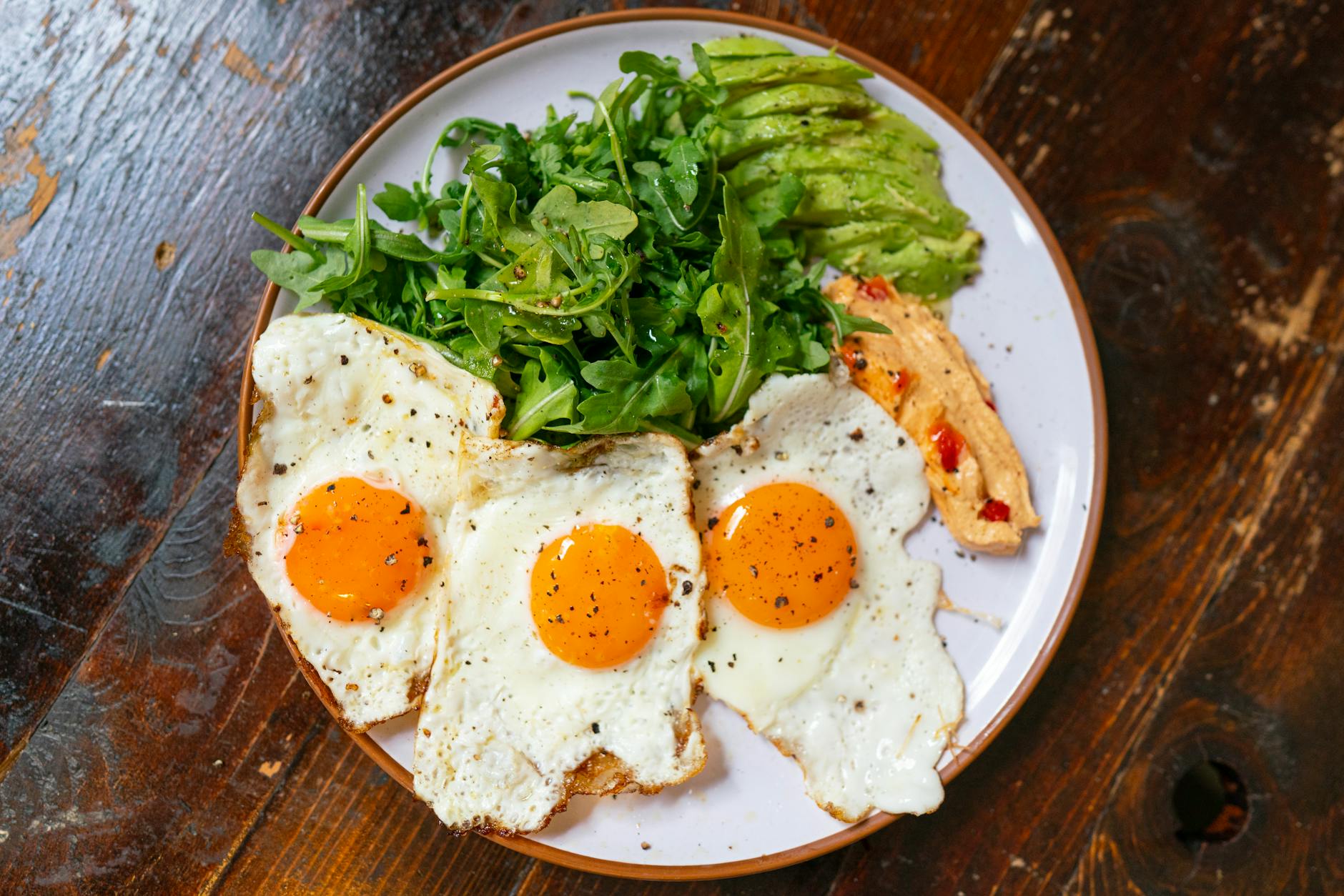
Eggs are the cornerstone of breakfast meal prep. One large egg delivers about 6 grams of protein at minimal cost. They are versatile enough to appear in a dozen different formats across the week without feeling repetitive. Buy them in 18-count cartons when you are prepping for a household of two or more.
Greek Yogurt
Plain, full-fat or 2% Greek yogurt delivers roughly 17 to 20 grams of protein per cup depending on the brand. Fage and Chobani are two widely available options with solid protein-to-calorie ratios. Avoid flavored varieties, which typically add 15 to 20 grams of added sugar per serving. Plain yogurt is your base, and you add flavor through your own toppings.
Cottage Cheese
Cottage cheese has had a significant comeback in recent years, and for good reason. A single cup of low-fat cottage cheese contains around 25 grams of protein. It blends smoothly into pancake batter, works as a high-protein base for savory bowls, and pairs well with fruit and a drizzle of honey for a quick assembled breakfast. Good Culture and Daisy are two reliable brands with clean ingredient lists.
Lean Ground Turkey and Chicken Sausage
Batch-cooked ground turkey or pre-made chicken sausage patties add substantial protein to any breakfast bowl and take less than 20 minutes to prepare on a Sunday. A four-ounce serving of lean ground turkey contains around 22 grams of protein. Season it simply with salt, pepper, fennel seed, and a pinch of red pepper flake and it works in egg muffins, breakfast bowls, and wraps.
Protein Powder
A high-quality whey or casein protein powder is useful for smoothie packs and protein pancakes. Look for options with at least 20 grams of protein per scoop and minimal added ingredients. Orgain, Optimum Nutrition Gold Standard Whey, and NOW Sports are all widely available options with straightforward ingredient lists.
Oats
Old-fashioned rolled oats are not a high-protein food on their own, but they serve as an effective vehicle for protein when combined with Greek yogurt, cottage cheese, protein powder, or eggs. They are also one of the best foods for steady energy release, which complements the satiety effect of protein well. Buy rolled oats rather than instant, which have a higher glycemic impact and a less satisfying texture in overnight preparations.
Three Batch Cooking Sessions That Cover the Whole Week
The most efficient way to approach breakfast meal prep is to divide your Sunday prep into three short sessions that each take under 30 minutes. Together, they produce enough food to cover five to six breakfasts with variety.
Session One: Egg Muffins (25 minutes)
Egg muffins are baked portions of seasoned egg mixture cooked directly in a muffin tin. They reheat in 60 seconds, they hold in the fridge for five days, and a batch of 12 gives you two to three per serving depending on how large your appetite runs in the morning.
To make a standard batch, whisk together 10 large eggs with a quarter cup of milk, salt, pepper, and any seasoning you like. Stir in your fillings, which might include diced bell pepper, cooked and crumbled turkey sausage, baby spinach, and shredded cheddar. Pour the mixture into a greased muffin tin and bake at 350 degrees Fahrenheit for 20 to 22 minutes until the centers are set and the edges are lightly golden. Let them cool completely before transferring to a sealed container in the fridge.
Three egg muffins with turkey sausage and vegetables delivers roughly 28 to 30 grams of protein. Add a side of Greek yogurt and you are well above 40 grams with almost no morning effort.
Session Two: Overnight Oats Assembly (15 minutes)
Overnight oats require no cooking. You simply combine your ingredients in a jar, seal it, and refrigerate overnight. The oats absorb the liquid and soften completely by morning.
For a high-protein version, the formula is straightforward. In a 16-ounce mason jar, combine half a cup of rolled oats with three-quarters of a cup of plain Greek yogurt, a quarter cup of milk, one scoop of vanilla protein powder, and a tablespoon of chia seeds. Stir well, seal, and refrigerate. In the morning, top with fresh berries or a tablespoon of almond butter.
This combination delivers approximately 35 to 40 grams of protein per jar. You can prep four to five jars in under 15 minutes on a Sunday. Vary the toppings across the week to keep things interesting: one jar gets blueberries and lemon zest, another gets sliced banana and peanut butter, another gets diced apple and cinnamon.
Session Three: Protein Pancake Batter and Turkey Patties (30 minutes)
Protein pancakes made with cottage cheese and eggs are significantly more nutritious than traditional flour-based versions. A simple high-protein batter combines one cup of rolled oats, one cup of cottage cheese, four eggs, and a teaspoon of vanilla in a blender until smooth. Cook like standard pancakes on a medium-heat non-stick skillet. A batch of 10 to 12 small pancakes freezes well for up to two months. Reheat directly in the toaster for a quick weekday breakfast.
While the pancakes cook, form and cook turkey sausage patties on a separate skillet. Mix a pound of lean ground turkey with half a teaspoon of salt, half a teaspoon of fennel seed, a quarter teaspoon of smoked paprika, and black pepper. Form into eight small patties and cook three to four minutes per side. Refrigerate for up to four days or freeze for up to two months.
Two protein pancakes with two turkey sausage patties delivers approximately 30 to 35 grams of protein and reheats in under three minutes.
Smoothie Packs: The 90-Second High-Protein Breakfast
Smoothie packs are one of the most underused meal prep strategies. The concept is simple: assemble individual smoothie ingredients into freezer bags or silicone freezer cups in advance. Each morning you dump one pack into a blender, add liquid, and blend. Total active time is about 90 seconds.
A high-protein green smoothie pack might include half a frozen banana, a large handful of spinach, half a cup of frozen mango chunks, and one tablespoon of almond butter, all pre-portioned into a bag. In the morning, add one cup of unsweetened almond milk and one scoop of vanilla protein powder, then blend. This delivers around 25 to 30 grams of protein depending on your powder, plus a solid serving of fruit and vegetables before most people have finished their first cup of coffee.
Prep eight to ten packs in a single session. Label each bag with the date and contents. They keep in the freezer for up to three months.
Building a Weekly Rotation That Does Not Feel Repetitive
Variety is what keeps a meal prep routine alive beyond the first two weeks. The goal is not to eat the same thing five days in a row but to rotate through two or three prepped options in a sequence that