The Complete Guide to Meal Prep Breakfast for Beginners
Let’s be honest — mornings are rough. The alarm goes off, you hit snooze twice, and suddenly you’re scrambling to get out the door with nothing but a sad granola bar shoved in your pocket. Sound familiar? That’s exactly why breakfast meal prep exists, and once you get the hang of it, you’ll wonder how you ever survived without it.
This guide is for people who are completely new to meal prepping their breakfasts. No complicated techniques, no fancy kitchen equipment required. Just real, practical advice that actually fits into a busy life. Let’s get into it.
Why Bother Prepping Breakfast in Advance?
Most people focus their meal prep efforts on lunch and dinner, leaving breakfast as an afterthought. That’s a mistake. Breakfast is the meal you’re least likely to think clearly about — because you’re half asleep when you need to make it. When there’s nothing ready to eat, you either skip it entirely or grab something convenient but terrible for you.
Prepping your breakfasts ahead of time solves that problem completely. You make the decisions once, when you’re alert and motivated, and then your future half-awake self just has to open the fridge. It also saves money. Buying a $6 coffee shop muffin every morning adds up to over $1,500 a year. A week of prepped breakfasts might cost you $10 to $15 total.
Beyond the money and convenience angle, eating a solid breakfast consistently tends to improve focus, reduce mid-morning energy crashes, and help you make better food choices throughout the rest of the day. It’s one of the highest-return habits you can build.
What You Need Before You Start
The Right Containers
You don’t need to buy an entire system of matching glass containers before you start. But you do need a few reliable options. Glass containers with locking lids are worth the investment if you plan to reheat food in the microwave. Mason jars are perfect for overnight oats, chia puddings, and smoothie ingredients. Silicone muffin trays are great for egg bites and mini frittatas.
Start with what you already have and fill gaps as you discover them. A set of 5 or 6 containers with tight seals covers most situations.
A Basic Pantry Setup
Having the right ingredients on hand makes prep day faster and cheaper. Here are the staples worth keeping stocked:
- Rolled oats (old-fashioned, not instant)
- Eggs
- Greek yogurt
- Chia seeds
- Frozen fruit
- Nut butter (peanut, almond, or whatever you prefer)
- Milk or a plant-based alternative
- Honey or maple syrup
- Whole grain bread or English muffins (kept in the freezer)
With those basics, you can make dozens of different breakfast combinations without a special grocery run every week.
The Best Breakfast Foods to Meal Prep
Overnight Oats
If you’re completely new to breakfast meal prep, start here. Overnight oats require zero cooking, take about five minutes to put together, and last up to five days in the fridge. The basic formula is simple: equal parts oats and liquid, plus a tablespoon of chia seeds to thicken things up, and whatever toppings you like.
A solid base recipe: combine half a cup of rolled oats, half a cup of milk, a tablespoon of chia seeds, a teaspoon of honey, and a pinch of salt in a jar. Stir well, seal it, and refrigerate overnight. In the morning, add your toppings — sliced banana, a spoonful of almond butter, fresh berries, or a handful of granola.
The beauty of overnight oats is the variety. You can make five jars with the same base but completely different flavors — peanut butter and banana, apple cinnamon, mixed berry, chocolate and hazelnut, tropical coconut. It never gets boring.
Egg Muffins and Mini Frittatas
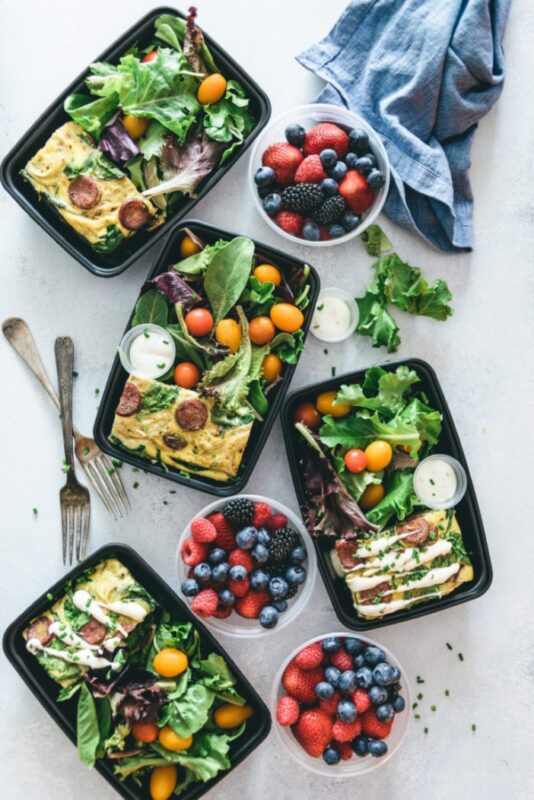
These are the savory answer to the overnight oats problem, and they’re just as easy. Basically, you’re making individual baked egg cups in a muffin tin. Whisk 8 to 10 eggs with salt, pepper, and a splash of milk. Pour the mixture into a greased muffin tin, add your mix-ins — diced peppers, spinach, crumbled sausage, shredded cheese, sun-dried tomatoes — and bake at 350°F for about 18 to 20 minutes.
You’ll end up with 10 to 12 egg muffins that keep well in the fridge for 4 to 5 days and reheat in the microwave in under a minute. Grab two or three in the morning and you’ve got a high-protein breakfast without any morning effort. They also freeze well, which means you can make a big batch and pull from the freezer all month.
Chia Pudding
Chia pudding has the same prep simplicity as overnight oats but a different texture — thick, almost custardy — which some people love and others need to warm up to. The ratio that works: 3 tablespoons of chia seeds to 1 cup of milk. Add a sweetener and a splash of vanilla extract, stir well, let it sit for 10 minutes, stir again to break up any clumps, then seal and refrigerate overnight.
By morning it will have thickened into a pudding-like consistency. Top it with mango and coconut flakes, or strawberries and a drizzle of honey. It keeps for up to five days and is particularly good for people who want something filling that doesn’t weigh them down.
Breakfast Burritos
Breakfast burritos are the meal prep option that feels the most like a proper meal. Scramble a large batch of eggs with your favorite fillings — black beans, salsa, shredded cheese, roasted potatoes, sautéed vegetables — then portion everything into tortillas and wrap them tightly in foil or plastic wrap. Freeze them.
In the morning, unwrap one burrito, wrap it loosely in a damp paper towel, and microwave it for 2 to 3 minutes, flipping halfway through. It comes out tasting genuinely good, not like a sad frozen thing. This method is especially useful if you want a big, satisfying breakfast without doing any morning cooking.
Sheet Pan Pancakes
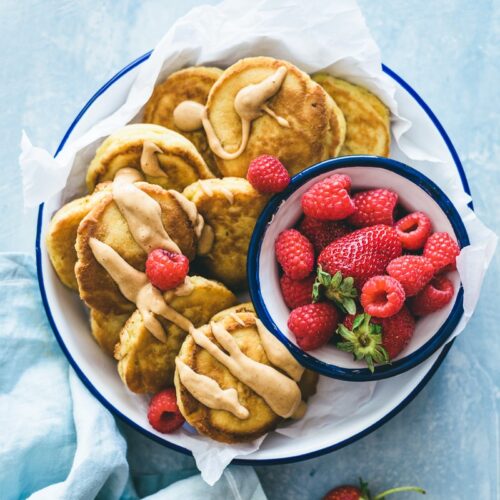
Yes, pancakes can be meal prepped. Instead of cooking them one at a time on the stovetop (which takes forever), pour your batter onto a parchment-lined sheet pan and bake it in the oven at 425°F for about 12 to 15 minutes. You get one large pancake slab that you cut into portions. Let it cool completely, then stack slices with parchment paper between them, bag them up, and freeze.
In the morning, pop a few slices in the toaster. They come out better than you’d expect — slightly crisp on the outside, fluffy inside. Add fruit, syrup, or yogurt and you’ve got a real breakfast in two minutes.
Yogurt Parfait Components
You can’t fully assemble a yogurt parfait in advance — the granola gets soggy — but you can prep all the components. Keep a large container of Greek yogurt in the fridge, a separate container of granola, and a container of mixed fruit. Each morning, layer them in a bowl or jar in about 60 seconds. This is a great approach for people who want flexibility and freshness but still want to eliminate decision-making from their mornings.
How to Plan Your Prep Day
Pick One or Two Days Per Week
Most people do their meal prep on Sunday, which makes sense — you’ve got time, and it sets you up for the week. But if Sunday feels overwhelming or you prefer to split the effort, Sunday and Wednesday works well. You prep half the week’s breakfasts on Sunday and top up mid-week.
For breakfast specifically, one prep day per week is usually enough if you’re making foods that last 4 to 5 days in the fridge. The exception is if you’re doing a full week of fresh food and nothing frozen.
Batch Your Prep Efficiently
The key to making prep day fast is doing everything in parallel. While your egg muffins are baking in the oven, assemble your overnight oat jars. While the egg muffins cool, portion and wrap your burritos. Prep day shouldn’t take more than 60 to 90 minutes if you move through tasks this way.
Write a simple checklist before you start so you’re not standing in the kitchen trying to remember what you planned to make. Even a sticky note works fine.
Don’t Over-Prep at First
One of the biggest beginner mistakes is going all-in on the first week and prepping seven different breakfast options, only to get overwhelmed and abandon the whole thing. Start with one or two recipes. Get comfortable with the routine. Then add variety over the following weeks as it starts to feel natural.
Practical Tips to Make It Stick
Label Everything
Put a small piece of masking tape on each container with the name of the food and the date you made it. This sounds unnecessarily detailed until you open your fridge on Friday and can’t remember when you made that jar of chia pudding. It takes five seconds and prevents food waste.
Keep Breakfast Separate in the Fridge
Designate one shelf or section of your fridge for breakfast prep. When everything is together in one spot, you can see at a glance what you have, what needs to be eaten soon, and what you’re running low on. It also makes grab-and-go genuinely fast.
Have a Backup Plan
Even with great prep habits, things happen. You run out earlier than expected, something goes bad, or you just didn’t have time to prep last week. Keep a few “zero effort” backup options on hand — a bag of frozen smoothie packets, a loaf of whole grain bread you can toast, or a container of protein powder. The goal is to never be completely without a breakfast option.
Factor In Your Schedule
Not every morning is the same. Some days you have 20 minutes to sit down and eat. Other days you’re running out the door in five minutes. Prep for both. Keep grab-and-go options like egg muffins and overnight oats ready for busy days, and have something more substantial like a sheet pan pancake or a warm burrito for mornings when you have a few extra minutes.
A Sample Week of Prepped Breakfasts
Here’s what a practical beginner week might look like:
- Monday: Peanut butter banana overnight oats
- Tuesday: Two egg muffins with spinach and feta
- Wednesday: Mango chia pudding
- Thursday: Breakfast burrito (from
Notice that this sample week mixes textures, temperatures, and flavors. You are not eating the same thing every day, which is one of the most common reasons people abandon meal prep routines. A cold overnight oat on Monday feels completely different from a warm burrito pulled from the freezer on Thursday, even though both were prepared on the same Sunday afternoon.
Storing and Reheating What You Make
Proper storage is what separates a successful prep session from a week of wasted food. Glass containers with tight-fitting lids work best for most breakfast items because they reheat evenly and do not absorb odors. Overnight oats and chia puddings keep well in mason jars for up to five days. Egg muffins should be refrigerated and eaten within four days, or frozen individually and reheated in the microwave for about sixty seconds. Sheet pan pancakes slice into portions that stack neatly in a zip-lock bag in the freezer and go from frozen to table-ready in under two minutes. Label everything with the date you made it so you are never guessing about freshness.
Reheating is worth thinking through in advance. A breakfast burrito reheats best when you loosen the foil, microwave it for ninety seconds, flip it, and go another sixty seconds. Egg muffins benefit from a damp paper towel placed over them while microwaving to keep them from drying out. If you have access to a toaster oven at work, pancake slices can be crisped up in a few minutes and taste nearly fresh-made.
Building the Habit Over Time
The goal for your first few weeks is not perfection — it is consistency. Pick two or three recipes, do one prep session, and see how the week feels. You will quickly learn which items you actually reach for and which ones sit untouched until Thursday. That information is more useful than any recipe list. Over time, you build a personal rotation that fits your schedule, your appetite, and your budget, and the whole process starts to take less than an hour each week. A sustainable breakfast prep habit is not about having an elaborate spread — it is about making sure that when your alarm goes off on a Tuesday morning, the hardest decision you face is which container to grab from the fridge.